Case
- ▪ Industry / Branch
- Recycling & Engineering
- ▪ Role
- Senior Product Developer. A LEAN project delivering a
sustainable consultancy website that is aesthetic, functional, and user-friendly through
collaborative design and development.
- ▪ Services
- Consulting · Analysis · Lean Development · UX Design
· UX/UI Engineering · Interactive Prototyping · Web Development ·
Usability · Optimization · Accessability Wcag + EAA
Challenge
- ▪ Client
- A start-up from the Netherlands operating at the intersection of recycling and
engineering. They needed to establish a credible, effective online presence quickly, without the
overhead of a lengthy, traditional development cycle.
- ▪ Requirement
- As a new company in a complex industry, they faced two challenges: quick market
entry and establishing credibility.
The site needed to launch fast to support early growth and present engineering expertise and
environmental commitment from day one.
Role
- ▪ Summary
-
A LEAN project delivering a sustainable consultancy website - aesthetic, functional, and
user-friendly through collaborative design and development.
As the Senior Product Developer, my responsibility spanned from initial consulting and
analysis through to UX design, UX/UI engineering, prototyping and final web development.
I worked directly with the start-up founder to translate a lean business vision into a
tangible, accessible digital platform.
- ▪ Team
- The project was initiated and successfully finalized in collaboration with UI
designer J. Skolnik.
Research
- ▪ Initial
- In a workshop with the UI designer, we landed on a clear value
proposition: technical expertise meets environmental accountability.
Potential clients-municipalities, construction firms, industrial partners, they would all
measure credibility by clarity and substance, and not by visual flash.
- ▪ Goal
-
- - Applying a LEAN approach allows for developing a high-value product in manageable
steps, as soon as content and concept are ready
- - Clearly communicate the company's dual focus on engineering precision and
environmental impact
- - Build a modular foundation that could scale with the business over time
Target
- ▪ Struggle
- Procurement managers in municipalities recycling need to vet partners quickly -
evidence of capability and compliance matters. Dense, text-heavy sites that bury direct
approach, certifications and fail on mobile cost them time and trust.
- ▪ Expectations
- Managers expect a site as precise as the engineering itself: scannable,
value-clear, and flawless on any device or network.
Persona
- ▪ The Vetting Manager
-
- Role: Project Lead, Municipal Waste Coordinator or Procurement
Officer
- Age: 35-55
- Motivation: Finding a reliable, compliant partner who can deliver
on sustainability targets.
- Pain Point: Wasting time on slow, unprofessional websites that lack
clear service descriptions or accessibility support.
- Quote: "If their website is a mess, I assume their project
management is too."
Features
- ▪ Core concept
- The design concept was driven by clarity and trust.
High-quality technical illustrations were created to explain complex recycling and engineering
processes simply. The information architecture was kept intentionally shallow to reduce
friction.
- ▪ Accessibility & Performance
- Full WCAG/EAA compliance was integrated from the start,
ensuring that the site is usable by all stakeholders, including government and
public sector employees who rely on assistive technologies.
A lean, framework-agnostic codebase ensures sub-second load times and minimal energy
consumption, aligning with the client's sustainability mission.
Validation
- ▪ Prototyping
- Given the LEAN mandate, a move was made directly into
high-fidelity HTML/CSS prototypes rather than static mockups. This allowed a
live, responsive version of the site to be interacted with by the founder on both phone and
desktop within days of the initial workshop.
- ▪ Refinement
- Feedback loops were short and actionable as we tested the clarity of the service
descriptions first and our understanding of the services.
Adjustments were made immediately in the Design System, content versioning, and codebase,
demonstrating the efficiency of the LEAN collaboration model.
The UX Research findings were firm, ensuring that the final narrative resonates with a
technical audience as well.
Choices
- ▪ Visual
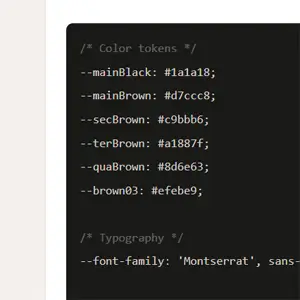
- A palette of browns, industrial dark greys and clean whites was chosen to
reflect both the environmental mission and the engineering backbone.
Typography is crisp and highly legible, reinforcing the brand's commitment to clarity and
precision.
- ▪ Technical
- Built with modular HTML/CSS/JS and zero dependencies, the
site is lightweight and secure. This approach not only ensures fast performance but also makes
future expansion straightforward - new sections can be added without significant refactoring.
Result
- ▪ Impact
- Sulvalda launched a professional online presence within a agreed timeline: a
digital trust signal that instantly positioned the start-up as a serious player in recycling and
engineering.
- ▪ Takeaways
-
- LEAN is a competitive advantage: For start-ups, the ability to iterate quickly in
code reduces time-to-value significantly.
- Trust is in the details: In technical industries, accessibility and performance
are not just nice-to-haves; they are indicators of operational competence.
- Modular code scales with the business: A simple, well-structured codebase is the
most sustainable foundation for future growth.
Final
- ▪ The platform
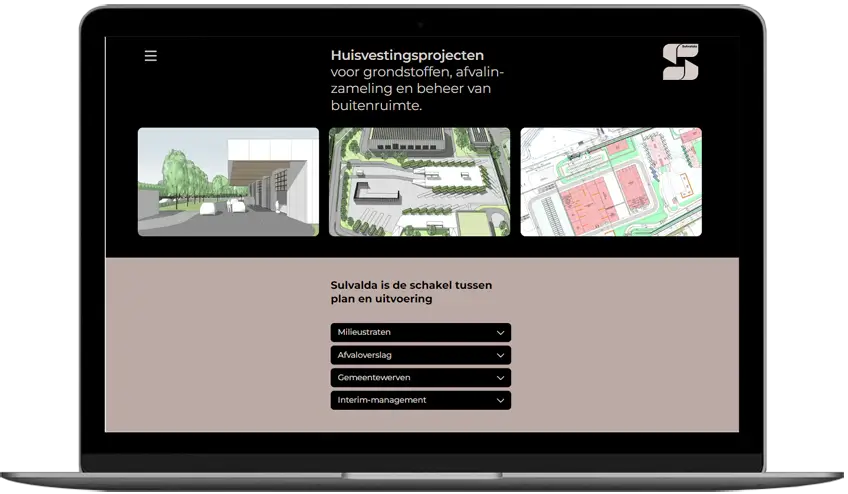
- The final website presents Sulvalda as a credible, modern and environmentally
conscious engineering partner.
It features a clean, industrial aesthetic with custom illustrations that demystify
recycling workflows.
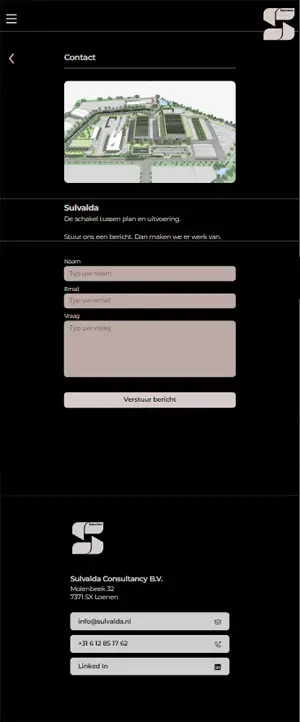
The site is fully accessible, performant on all devices, and built modular-ready for future
expansion.
Case
- ▪ Industry / Branch
- Recycling & Engineering
- ▪ Role
- Senior Product Developer. A LEAN project delivering a sustainable consultancy website that is aesthetic, functional, and user-friendly through collaborative design and development.
- ▪ Services
- Consulting · Analysis · Lean Development · UX Design · UX/UI Engineering · Interactive Prototyping · Web Development · Usability · Optimization · Accessability Wcag + EAA
Challenge
- ▪ Client
- A Dutch start-up at the intersection of recycling and engineering needed to establish credibility online - fast. As a new player in a complex, compliance-heavy industry, they couldn't afford a slow traditional build. The site had to launch quickly, and it had to signal competence from day one.
Role
- ▪ Summary
-
As a Senior Product Developer, I led the end-to-end engineering process, including concept consultation, analysis, UX, prototyping, and final development.
I collaborated closely with UI designer J. Skolnik to transform a business vision into an accessible and user-friendly digital platform, ensuring smooth integration between design and functionality.
Research
- ▪ Initial
- An early workshop with the UI designer crystallised a clear value proposition:
- technical expertise meets environmental accountability.
The target audience - procurement managers at municipalities, construction firms, and industrial partners, they measures credibility through clarity and substance, not visual spectacle.
Dense, mobile-unfriendly sites lose them immediately.
That insight drove every decision: the site needed to be scannable, value-clear, and flawless on any device.
Design & Features
- ▪ Core concept
- The information architecture was kept deliberately shallow to reduce friction. Custom technical illustrations were created to explain complex recycling and engineering processes at a glance.
A palette of industrial dark greys, earthy browns, and clean whites reflects both the engineering backbone and the environmental mission.
Typography is crisp and highly legible throughout.
- ▪ Accessibility
- WCAG/EAA compliance was built in from the start - essential for a client base that includes public sector stakeholders relying on assistive technologies.
Process
- ▪ Basics
- Rather than static mockups, the team moved directly into high-fidelity HTML/CSS prototypes.
Within days of the first workshop, the founder could interact with a live, responsive version of the site on both phone and desktop.
Feedback loops were short: adjustments landed immediately in the design system and codebase, proving out the LEAN model in practice.
Technical
- ▪ Choices
- The site is built with modular HTML/CSS/JS and zer0 external dependencies - lightweight, secure, and sub-second in load time.
This framework-agnostic approach also aligns with Sulvalda's sustainability mission and keeps future expansion straightforward without significant refactoring.
Result
- ▪ Impact
- Sulvalda launched within the agreed timeline with a professional, fully accessible online presence that positioned them as a credible engineering partner from day one.
- ▪ Takeaways
-
- LEAN is a competitive advantage: For start-ups, the ability to iterate quickly in code reduces time-to-value significantly.
- Trust is in the details: In technical industries, accessibility and performance are not just nice-to-haves; they are indicators of operational competence.
- Modular code scales with the business: A simple, well-structured codebase is the most sustainable foundation for future growth.
Persona
- ▪ The Vetting Manager
-
- Role: Project Lead, Municipal Waste Coordinator or Procurement Officer
- Age: 35-55
- Motivation: Finding a reliable, compliant partner who can deliver on sustainability targets.
- Pain Point: Wasting time on slow, unprofessional websites that lack clear service descriptions or accessibility support.
- Quote: "If their website is a mess, I assume their project management is too."